Report: The Culinary History of Sea Turtles and the Shift from Exploitation to Protection
1. Historical Context and Global Popularity as Food

For centuries, sea turtles—particularly the Green Sea Turtle—were a staple food source for a diverse range of people. The first Europeans to consume them were sailors, who kept live turtles on their ships to ensure a supply of fresh meat during long voyages. Beyond the maritime world, turtle meat and fat sustained an array of populations, including slaves, settlers, and indigenous groups.

By the 18th century, turtle soup had transformed into a luxury dish enjoyed by affluent consumers from London to Miami. High-end establishments like the Hoboken Turtle Club, founded in 1796, attracted elite members—from politicians to literary figures—to dine on “fine green turtles” for breakfast and dinner well into the 20th century. As the American middle class grew in the mid-20th century, the desire to mimic the tastes of the wealthy led to a surge in consumption, with canned real and mock turtle soups becoming common on family dining tables.

2. Traditions and Market Value in Hawaii
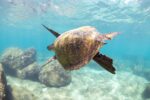
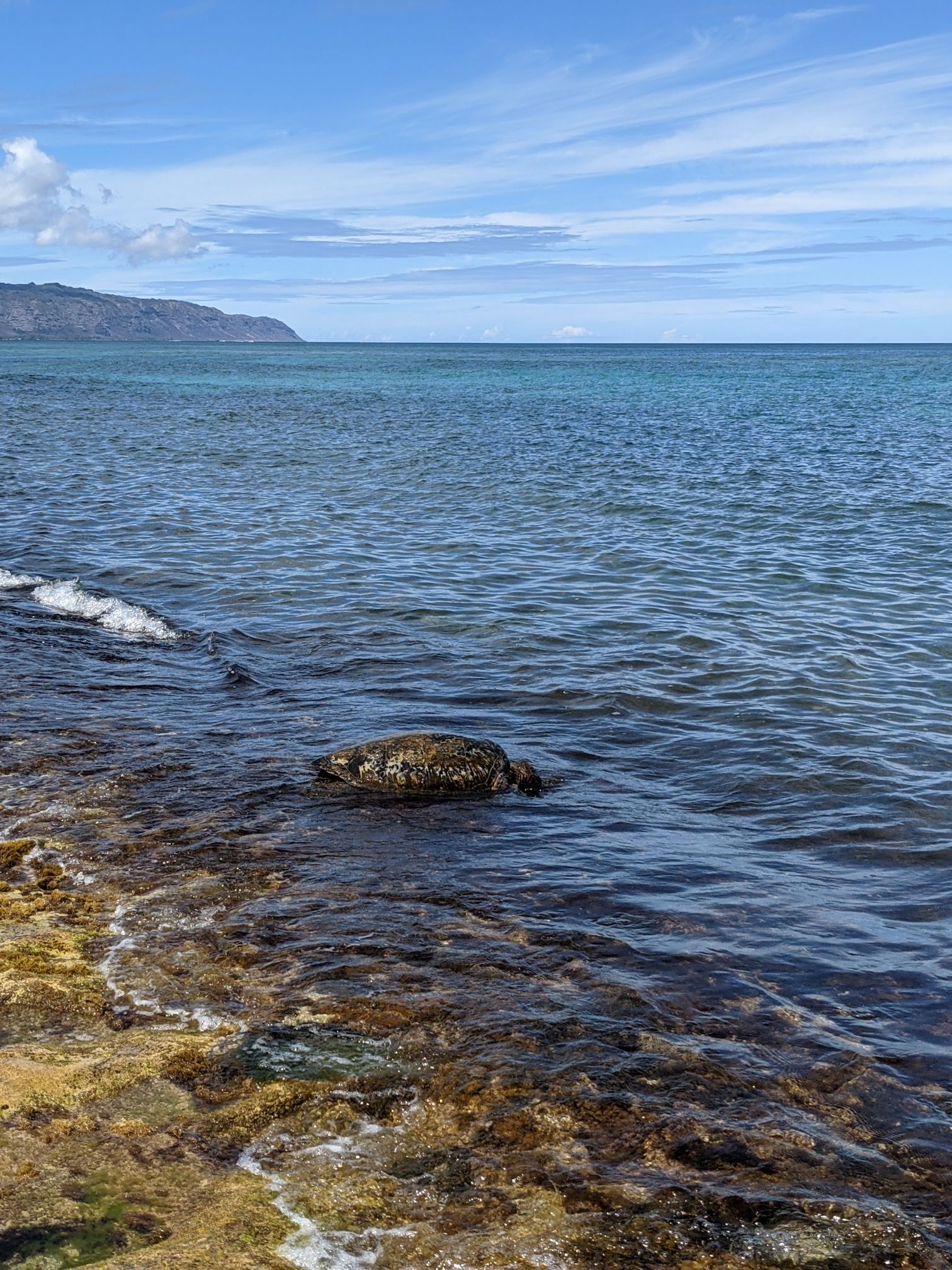
In Hawaii, Green Sea Turtles (Honu) were a traditional food source for Native Hawaiians. Their meat, viscera, and eggs supplemented a diet primarily consisting of fish, birds, and taro. Adult females were especially prized as a delicacy due to their high content of green body fat.

This culinary practice continued into the late 20th century, with turtle steak and soup being served in fine dining restaurants and sold in local markets throughout Honolulu. In the 1970s, the market demand was so high that turtle meat and carapaces could fetch up to $100 each on the open market. Records from the Hawaii State Division of Fish and Game show that between 1948 and 1973, the reported catch totaled over 90,803 kg, though this is considered a significant underestimate due to a lack of verification at the time.
3. The Turn Toward Conservation
The era of legal consumption ended in 1978 when Green Sea Turtles were officially listed under the Endangered Species Act (ESA). Following this listing, the harvest of these animals became illegal.
While anecdotal evidence suggests that some level of illegal poaching may still occur across the main Hawaiian Islands today, the exact extent remains unknown. The cultural perception has shifted dramatically: what was once a centerpiece for Independence Day celebrations and exclusive club dinners is now a strictly protected wildlife icon.

References
Batchelor, A. (2017, October 5). Man sentenced to 30 days in jail for lifting sea turtle out of water. Local 10 News. https://www.local10.com/news/2017/10/05/man-sentenced-to-30-days-in-jail-for-lifting-sea-turtle-out-of-water/
Benson, B. (1974, May 29). Turtle-steak ban begins tomorrow. The Honolulu Advertiser. https://georgehbalazs.com/wp-content/uploads/2019/08/1974-TURTLE-STEAK-LOOPHOLE-HONOLULU-NEWSPAPER-ARTICLES-1.pdf
Center for Biological Diversity. (2016, April 5). Green sea turtles recovering on U.S. coasts. https://www.biologicaldiversity.org/news/press_releases/2016/green-sea-turtles-04-05-2016.html
Crawford, S. D. (2021, August 8). The end of turtle soup. History Today. https://www.historytoday.com/archive/history-matters/end-turtle-soup
Department of Land and Natural Resources (DLNR). (2021, October 10). Sea turtles. State of Hawaii Division of Aquatic Resources. https://dlnr.hawaii.gov/dar/species/sea-turtles/
Embrace Someplace. (2021, October 6). The 10 best spots to find sea turtle on Oahu. https://embracesomeplace.com/sea-turtles-oahu/
Ganaden, S. (2011, November 9). De-listing the Hawaiian green sea turtle? Honolulu Magazine. https://www.honolulumagazine.com/de-listing-the-hawaiian-green-sea-turtle/
Gomes, A. (2021, August 24). Plan laid out to realign highway away from Laniakea Beach. Honolulu Star-Advertiser. https://www.staradvertiser.com/2021/08/24/hawaii-news/plan-laid-out-to-realign-highway-away-from-laniakea-beach/
Hara, L. M. (2021, October 14). Should a Native Hawaiian right to take green sea turtles be recognized under the Endangered Species Act? University of Hawaii. http://www.hawaii.edu/ohelo/resources/ELP_SSO/hara.html
Hawaii State Department of Land and Natural Resources. (2021). Safe fishing practices for sea turtles. In Hawai’i Fishing Regulations (p. 63).
JSTOR Daily. (2021, October 12). Turtle soup: From class to mass to aghast. https://daily.jstor.org/turtle-soup-from-class-to-mass-to-aghast/
KHON2. (2021, July 28). Officers, volunteers remain at Laniakea Beach to educate visitors about respecting wildlife. https://www.khon2.com/local-news/officers-volunteers-remain-at-laniakea-beach-to-educate-visitors-about-respecting-wildlife/
Mālama na Honu. (2021, October 9). Information. https://malamanahonu.org/information/
National Oceanic and Atmospheric Administration (NOAA). (2017, November 30). Men fined for capturing a Hawaiian green sea turtle. https://www.fisheries.noaa.gov/feature-story/men-fined-capturing-hawaiian-green-sea-turtle
National Oceanic and Atmospheric Administration (NOAA). (2020, May 8). Sea turtle research in the Pacific. https://www.fisheries.noaa.gov/pacific-islands/sea-turtle-research-pacific
National Oceanic and Atmospheric Administration (NOAA). (2021, March 26). By the numbers: The annual migration of green sea turtles in Hawaiʻi. https://www.fisheries.noaa.gov/feature-story/numbers-annual-migration-green-sea-turtles-hawaii
National Oceanic and Atmospheric Administration (NOAA). (2021, September 28). Viewing marine wildlife in Hawaiʻi. https://www.fisheries.noaa.gov/pacific-islands/marine-life-viewing-guidelines/viewing-marine-wildlife-hawaii
Nemo, L. (2018, February 13). Why Gold Rush miners imported sea turtles. Atlas Obscura. https://www.atlasobscura.com/articles/gold-rush-sea-turtles
Pilcher, N. J. (2011, February 1). Hawaii’s unique turtles. The State of the World’s Sea Turtles. https://www.seaturtlestatus.org/articles/2011/hawaiis-unique-turtles
Schenfeld, N. (2021, July 16). Locals say harassment of sea turtles at Laniakea Beach has gotten worse. KHON2. https://www.khon2.com/local-news/hawaii-officials-to-discuss-recent-videos-of-people-touching-endangered-monk-seals/
Schenfeld, N. (2021, August 8). Several Native Hawaiian organizations ask leaders to stop prioritizing tourism. KHON2. https://www.khon2.com/local-news/several-native-hawaiian-organizations-ask-leaders-to-stop-prioritizing-tourism/
Schweitzer, T. (2009). The turtles of Philadelphia’s culinary past. Penn Museum. https://www.penn.museum/sites/expedition/the-turtles-of-philadelphias-culinary-past/
Seminoff, J. A., Allen, C. D., Balazs, G. H., Dutton, P. H., & Eguchi, T. (2021, October 10). Status review of the green turtle (Chelonia mydas) under the Endangered Species Act. National Oceanic and Atmospheric Administration. https://repository.library.noaa.gov/view/noaa/4922
State of Hawaii Department of Transportation. (2021, August). Draft environmental assessment: Kamehameha Highway pedestrian safety project vicinity of Laniakea Beach. http://oeqc2.doh.hawaii.gov/Doc_Library/2021-08-23-OA-DEA-Kamehameha-Highway-Pedestrian-Safety-Project-near-Laniakea.pdf
Steen, D. A. (2016, January 4). Why don’t people eat turtle soup anymore? Slate. https://slate.com/technology/2016/01/turtle-soup-disappeared-because-people-ate-too-many-turtles.html
Tam, N. (2018, May 10). Arrest made after second turtle killing on Kauai. KITV4. https://www.kitv.com/story/38156078/arrest-made-after-second-turtle-killing-on-kauai

Related Posts
Series Title: “The Hawaiian Honu: From the Brink of Extinction to a Future of Coexistence (7-Part Series)”
- History of Turtle Hunting
- Green Turtle-steak and Green Turtle soup!?Our food history
- The Incredible Journey and Habitats of the Hawaiian Honu
- Self-Guided Turtle Walking Tour in Haleiwa, North Shore Oahu
- Report Potential Marine Wildlife Harassment in Hawai‘i
- How to see green sea turtles in HawaiiHow to see green sea turtles in Hawaii
- 2026 Hawaii Urban Planning Paradigm Shift: Rebuilding the North Shore and the Challenge of Sustainability