Captain James Cook (1728–1779) was a British navigator, explorer, and cartographer who brought the Great Age of Discovery to its grand finale. Through his three landmark voyages across the Pacific Ocean, Cook didn’t just explore the world—he revolutionized geography, navigation, and maritime science.
Here is a look at the major achievements that cemented his legacy in world history.
1. Mapping the Uncharted Pacific
During his three major voyages (1768–1779), Cook surveyed and mapped vast stretches of the Pacific Ocean with unprecedented precision.
- New Zealand & Australia: On his first voyage, Cook became the first European to circumnavigate and map the entire coastline of New Zealand, discovering the strait that now bears his name (Cook Strait). He then charted the east coast of Australia—landing at Botany Bay—and claimed the territory for Great Britain.
- First European Contact with Hawaii: On his third voyage in 1778, Cook became the first European recorded to have reached the Hawaiian Islands, which he named the Sandwich Islands.
- Charting Pacific Island Groups: He accurately pinpointed and charted numerous islands across the South Pacific, including New Caledonia, Vanuatu, and Tahiti.
2. Debunking the Myth of the Great Southern Continent
For centuries, European geographers believed in Terra Australis Incognita—a massive, fertile southern continent hypothesized to “balance” the landmasses of the Northern Hemisphere. During his second voyage, Cook became the first navigator to cross the Antarctic Circle. By charting the icy, high-latitude waters of the far south, he proved that no such habitable giant continent existed.
3. Revolutionizing Navigation and Precision Cartography
Cook’s expeditions were distinguished by an uncompromising commitment to scientific rigor.
- Mastering Longitude with the Marine Chronometer: Cook successfully tested Larcum Kendall’s replica of John Harrison’s H4 marine chronometer on his second voyage. This breakthrough allowed sailors to determine longitude accurately at sea for the very first time.
- Unmatched Sea Charts: Combining astronomical observations with precise coastal surveys, Cook produced charts so accurate that many remained in practical naval use well into the 19th century.
4. Eradicating Scurvy on Long-Distance Voyages
Scurvy had long been the silent killer of sailors on prolonged journeys. Cook recognized the importance of diet and sanitation, enforcing strict hygiene practices and requiring his crew to consume fresh fruits, citrus, and sauerkraut (rich in Vitamin C). As a result, Cook did not lose a single crew member to scurvy during his second voyage—a historic feat that set new standards for maritime health.
5. Establishing the Gold Standard for Scientific Expeditions
Cook’s first voyage carried a dedicated team of scientists and artists, including the renowned naturalist Joseph Banks. Their mission combined astronomical observations (such as tracking the Transit of Venus in Tahiti) with extensive biological cataloging, collecting thousands of plant and animal specimens unknown to Western science. This integrated approach served as the blueprint for future scientific expeditions, including Charles Darwin’s famous voyage on the HMS Beagle.
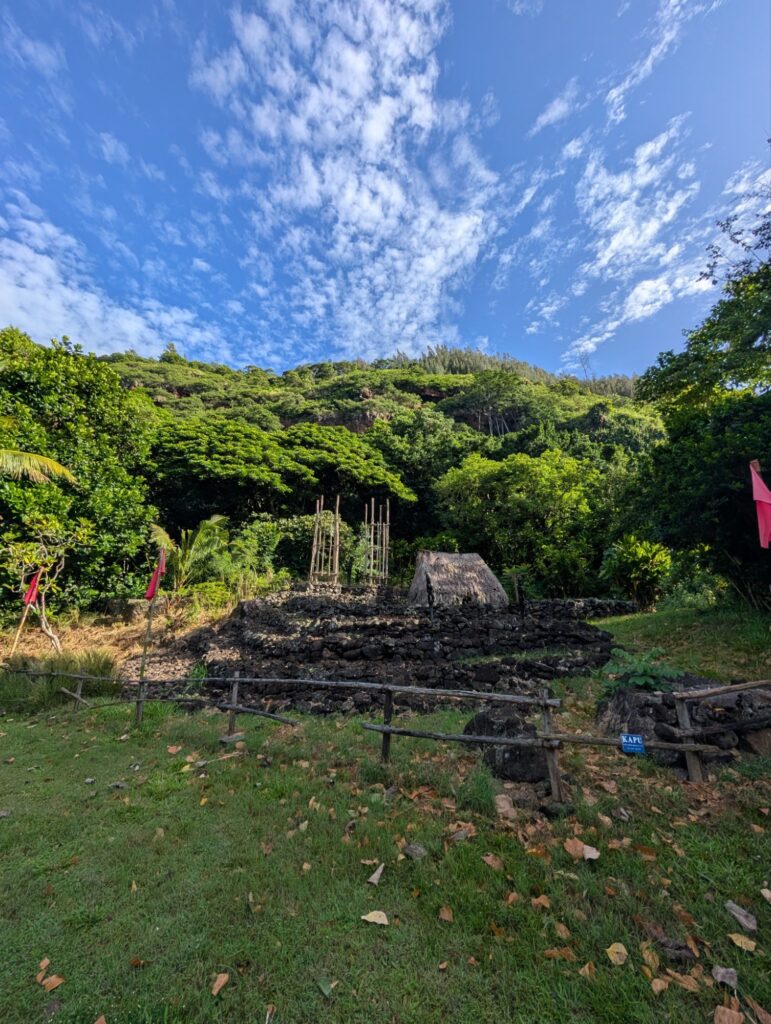
Beyond the Stones: The Sacred Art and Architectural History of Hawaiian Pōhaku
When visiting Hawaiʻi, travelers often admire the majestic black lava walls, intricate stone fishponds, and…
The Remarkable Achievements of Captain James Cook: The Navigator Who Mapped the Pacific
Captain James Cook (1728–1779) was a British navigator, explorer, and cartographer who brought the Great…
\Special Bonus!/ Free Optional Mini-Tour Included!
All North Shore Shuttle passengers are welcome to join our FREE Optional Mini-Tour! Enhance your…
The Ultimate North Shore Day Trip: Snorkeling at Shark’s Cove & Exploring Haleiwa
The Ultimate North Shore Day Trip: Snorkeling at Shark’s Cove & Exploring Haleiwa When people…
【North Shore Escape】Sunset Beach and Haleiwa: The Ultimate Day Trip Plan
Aloha! While the energy of Waikiki is undeniable, sometimes you just need to leave the…
The Ultimate North Shore Shuttle: How to Visit Sunset Beach & Shark’s Cove Without a Car!
If you’re dreaming of the North Shore but don’t want to deal with the stress…