The Waiʻanae mountain range on the island of Oʻahu serves as a profound chronological bridge, connecting the foundational spiritual practices of ancient Hawaiʻi with the cutting-edge requirements of modern global security. Under the watchful mist of traditional rains like the Līlīlehua, the Nāulu, and the Kiʻowao, this region has transitioned from a sacred “piko” (navel) of birth and mana to a strategic “window to the universe.” To the Cultural Technologist, the ridges of Waiʻanae represent a single, continuous instrument for navigating the heavens—a physical alignment tool for the ancient Kahuna and a radar platform for the modern Space Force.
- Then: Kūkaniloko served as the “piko” of the islands, a sacred site where aliʻi (royalty) were born to ensure they were suffused with mana (divine power), utilizing the silhouettes of the Waiʻanae mountains to synchronize earthly rule with celestial movements.
- Now: Kaʻena Point serves as a high-tech “window” into the cosmos, utilizing advanced radar to track over 185 satellites and support orbital surveillance, manned spaceflight, and global navigation.
Ancient Astronomy: The Kahuna Kilo Kilo and Kūkaniloko
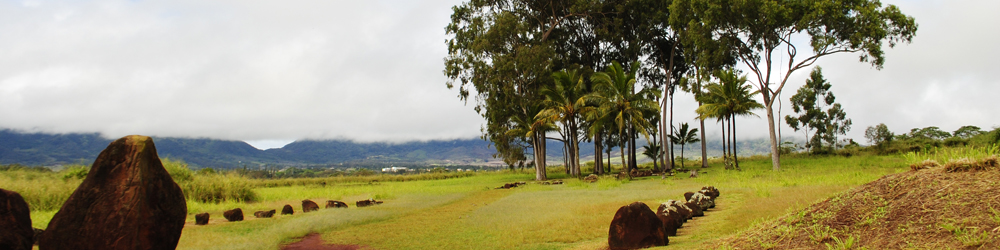
In the central plains of Oʻahu, framed by the majestic ridges of the Waiʻanae Mountains, lies Kūkaniloko. This site was the epicenter of Hawaiian social stratification and divine kingship. While modern interpretations sometimes search for lithic telescopes, the true technological sophistication of the Kahuna Kilo Kilo (ancient astronomers) lay in their mastery of the landscape. They utilized the jagged silhouettes of the Waiʻanae ridges as a precise reference system to track solar and stellar movements.Kūkaniloko was, first and foremost, a site of mana . It was the birthing place of the aliʻi , chosen specifically because the alignment of the heavens with the mountain peaks ensured that high-ranking children were “suffused with mana at birth.” This connection between the stars and the land legitimized the ruler’s genealogy ( Moʻokūʻauhau ), weaving the identity of the chief into the fabric of the universe itself.In the Hawaiian worldview, Mana is a vibrant, multi-dimensional force that intertwines culture, identity, and the environment. It is felt in the material world but originates in the spiritual.
- Inherited Mana: Traced through Moʻokūʻauhau (genealogy), this mana connects individuals to akua (ancestral gods). The aliʻi held a more direct lineage to these deities, establishing their rank in the social hierarchy.
- Acquired Mana: This is earned through “great feats, skill, artistry, and talents.” It is cultivated through rigorous education, training, and pono (righteous) behavior. Experts in their fields—from ancient navigators to modern engineers—are recognized as possessing immense acquired mana.
Modern Engineering: Kaʻena Point Space Force Station
At the westernmost point of Oʻahu, where the land meets the sea at the Leina a Ka ʻUhane (the leap-off point for souls), the focus shifts from the spiritual birth of kings to the technical defense of the planet. On June 16, 2021, the Kaʻena Point Satellite Tracking Station was formally renamed the Kaʻena Point Space Force Station, acknowledging its vital role in the United States Space Force.The station is home to Detachment 3 of the 21st Space Operations Squadron, a unit with a 60-year legacy of excellence. Where the Kahuna once looked to the mountain peaks to read the stars, modern operators look through a massive “golf ball” radome. This facility is a critical node in the Satellite Control Network (SCN), performing mission operations 24 hours a day to support communications, reconnaissance, and ballistic missile early warning.| Component | Ancient Tool (Kūkaniloko) | Modern Tool (Kaʻena Point) || —— | —— | —— || Observation Markers | Ridges and mountain silhouettes | High-output radar antennas and radomes || Signal Type | Visible stellar and solar light | Invisible radio waves || Tracking Range | Horizon-based celestial movements | Orbital space (185+ satellites) || Primary Mission | Divine Kingship and Social Stratification | Global Surveillance and Defense |
Thematic Analysis: The Unchanging Passion for “ʻIke” (Knowledge)
While tools have evolved from basalt to high-output radar, the underlying motivation—the pursuit of ʻIke (knowledge)—remains the defining constant of the Waiʻanae Range.
- The Evolution of the Expert: The Kahuna of antiquity and the technical operators of Space Delta 6 are both Tufunga (experts). They are a specialized class entrusted with the safety of the community through the observation of the “invisible” realm—whether that be the flow of spiritual mana or the pulse of radio telemetry.
- ʻIke Āina (Knowledge of the Land): Knowledge is a river. The ancient understanding of the land’s spiritual topography is mirrored in the modern SCN. Both systems rely on a “flow” of data to maintain the health of the lāhui (nation). To block this flow is to risk the death of the culture.
- Celestial Responsibility: Whether tracking the rising of the Pleiades to initiate the Makahiki season or monitoring a manned spaceflight mission, the focus on the sky remains the primary method for ensuring terrestrial security and prosperity.
Challenges to Preservation: The Threat of “Blockages”
The perpetuation of ʻIke Āina is currently under severe threat. Like the Kawaihāpai River, which is now choked with overgrowth and no longer reaches the sea, the flow of cultural knowledge is being obstructed by modern neglect and restricted access.The paʻakai (salt) gathered from the rocks at Kaʻena, once pure, is now frequently contaminated by litter. Furthermore, red dirt erosion caused by unauthorized off-road driving is actively damaging the natural shell beds ( pūpū ), destroying the resources used by cultural practitioners.WARNING: The installation of restricted military zones and the requirement of permits for nighttime access create a “blockage” in traditional rights. When practitioners are denied the ability to gather kūpeʻe (marine snails) or observe the stars at the Leina a Ka ʻUhane, the history of the 13 ahupuaʻa of Waialua—from Kaʻena to Kāpaeloa—risks being lost to time.
Conclusion: A Legacy Written in the Stars
The Waiʻanae Range remains Oʻahu’s most significant vertical link between the earth and the sky. From the basalt birthing stones of Kūkaniloko to the high-power radar of Kaʻena Point, the ridge serves as a bridge between the divine kingship of the past and the orbital defense of the future. The transition from “Sacred Stones to High-Power Radar” is not a replacement of history, but an evolution of the human spirit’s enduring need to understand its place in the universe.”The knowledge of our ancestors must flow like the rains of Waialua; to block the path to the stars is to block the path to ourselves.”
References
Kirch, P. V. (2010). How chiefs became kings: Divine kingship and the rise of archaic states in ancient Hawaiʻi . University of California Press.Office of Hawaiian Affairs. (2017, December). Mana Lāhui Kānaka .Paracuelles, A. (2023). Perpetuation of ʻIke Āina in Waialua. Horizons , 8, 14–19. University of Hawaiʻi at Mānoa.Peterson-Schriever Space Force Base. (2021, June 17). Kaena Point renaming ceremony . Peterson-Schriever Garrison Public Affairs.
Reflection : Echoes of the Sky: Connecting Ancient Wisdom and Modern Curiosity on the Waiʻanae Range
As you descend H2 toward the North Shore, you arrive at the “piko” (navel) of Oahu—the island’s literal and spiritual center. Standing in this vast central plain, you are embraced by the majestic Waiʻanae Range to the west and the Koʻolau Mountains to the east.
Passing by the sacred site of Kūkaniloko, one cannot help but feel the weight of history. On a clear night, the sky here is a breathtaking tapestry of stars. It is a place where the movement of celestial bodies and the waxing and waning of the moon can be observed with ease, just as the ancient Hawaiians once did. In the profound silence that remains today, it is easy to imagine their lives—governed not by clocks, but by the natural rhythms of the earth and sky.
Yet, a glance toward the ridgeline of the Waiʻanae Range reveals the silhouettes of modern antennas. If you travel further to Kaʻena Point, the high-tech radar stations come into view.
We, the people of the modern era, live in a constant ebb and flow of restless anxiety and boundless curiosity—wondering where we stand and what the future holds. Even with our advanced technology, the sense of wonder we feel when looking at the stars remains unchanged. The hope we pin on the horizon is the same hope felt by those who stood here centuries ago.
When I think about this transition—from sacred stones to satellite tracking—I realize that it is our relentless curiosity that has allowed humanity to endure. From the past to the present, and into the future, we continue to survive and evolve because we never stop looking up and asking, “Why?”
The Waiʻanae Range stands as a silent witness to this eternal human spirit.