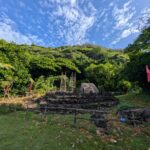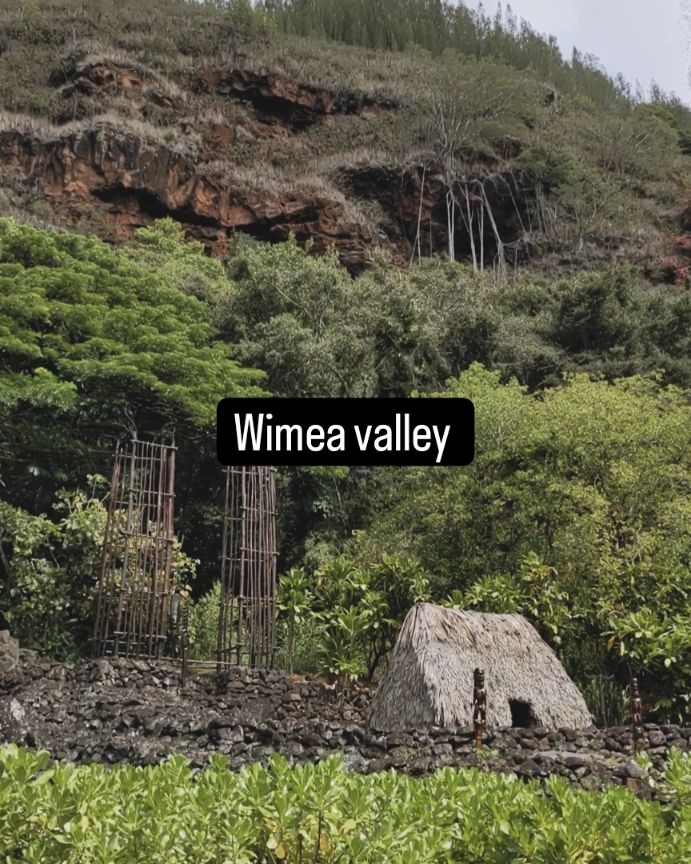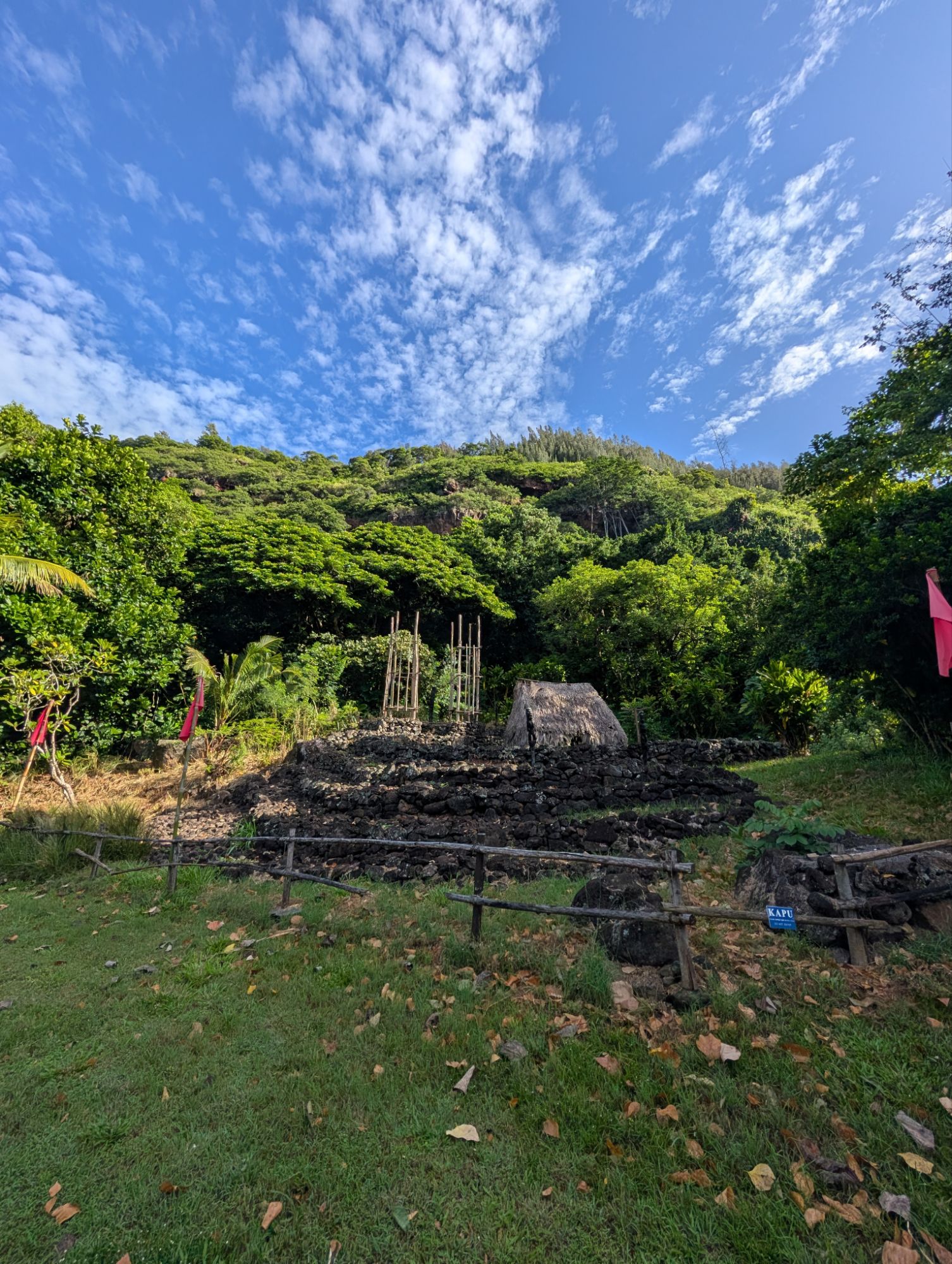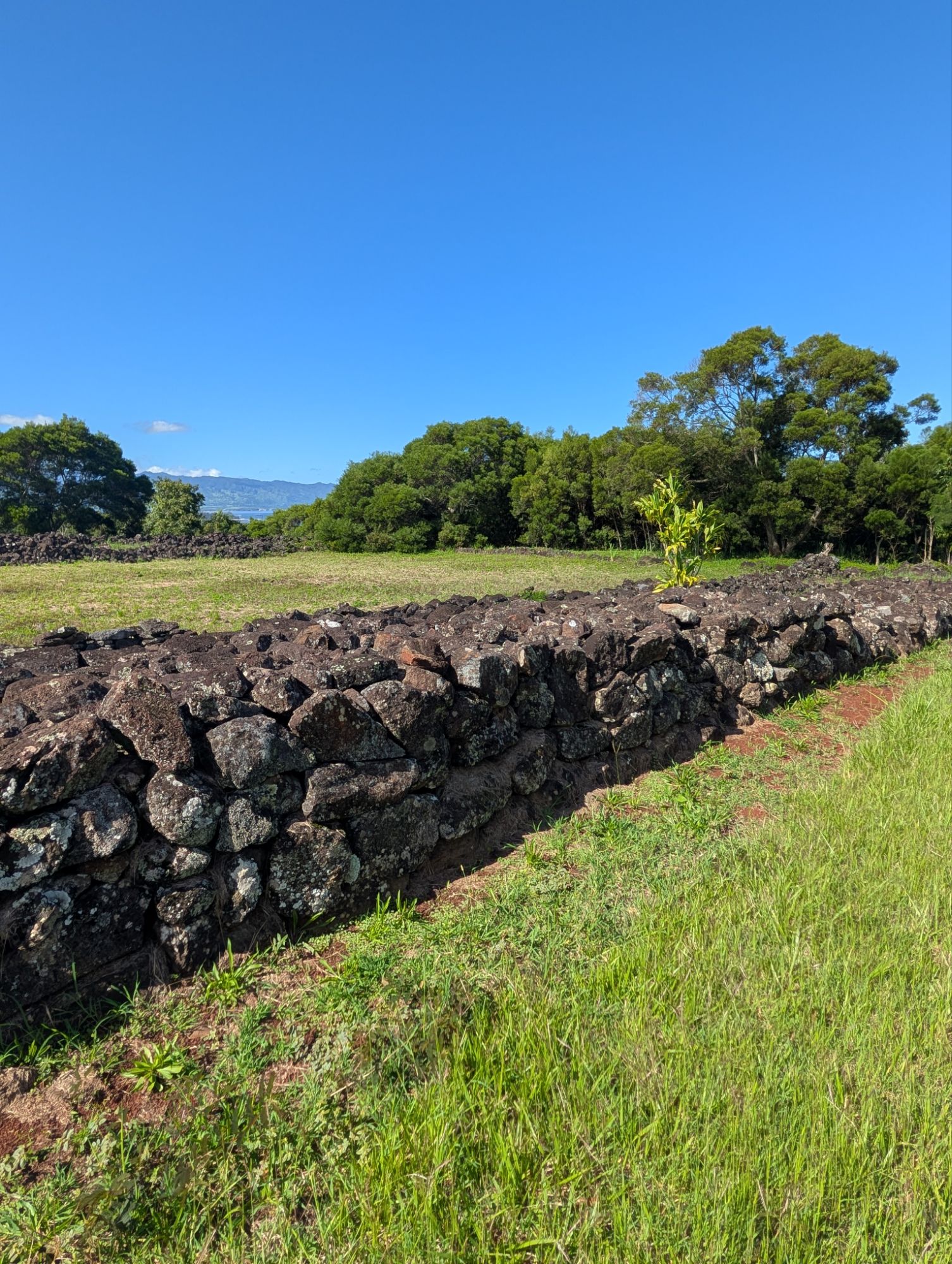
Perched high on a rocky promontory in Pūpūkea, overlooking the sweeping expanse of Oʻahu’s famous Waimea Bay and Waimea Valley, sits Puʻu o Mahuka Heiau. Spanning roughly 8,000 square feet, it is one of the island’s most prominent and culturally significant sacred stone monuments.
Beyond its breathtaking panoramic views, this massive complex tells an extraordinary story of ancient Hawaiian astronomy, dry-stack architectural mastery, and the spiritual power of pōhaku (stone).
1. A Sacred Sanctuary Guided by the Stars
Constructed in the 1600s and expanded over generations, Puʻu o Mahuka Heiau served as a central place of worship before being abandoned in the 1820s following the introduction of Christianity to the ruling aliʻi (royalty).
- Deities of War and Agriculture: The temple was originally dedicated to Lono o ka Makahiki, the god of agriculture and fertility, and was later converted into a luakini (war temple) dedicated to the god Kū.
- Astronomical Precision: The temple precincts were purposefully aligned with celestial events. In November, priests and astronomers at the heiau observed the rising of the Pleiades constellation (Makaliʻi) over Kaʻena Point to the west, marking the official arrival of the Makahiki harvest season.
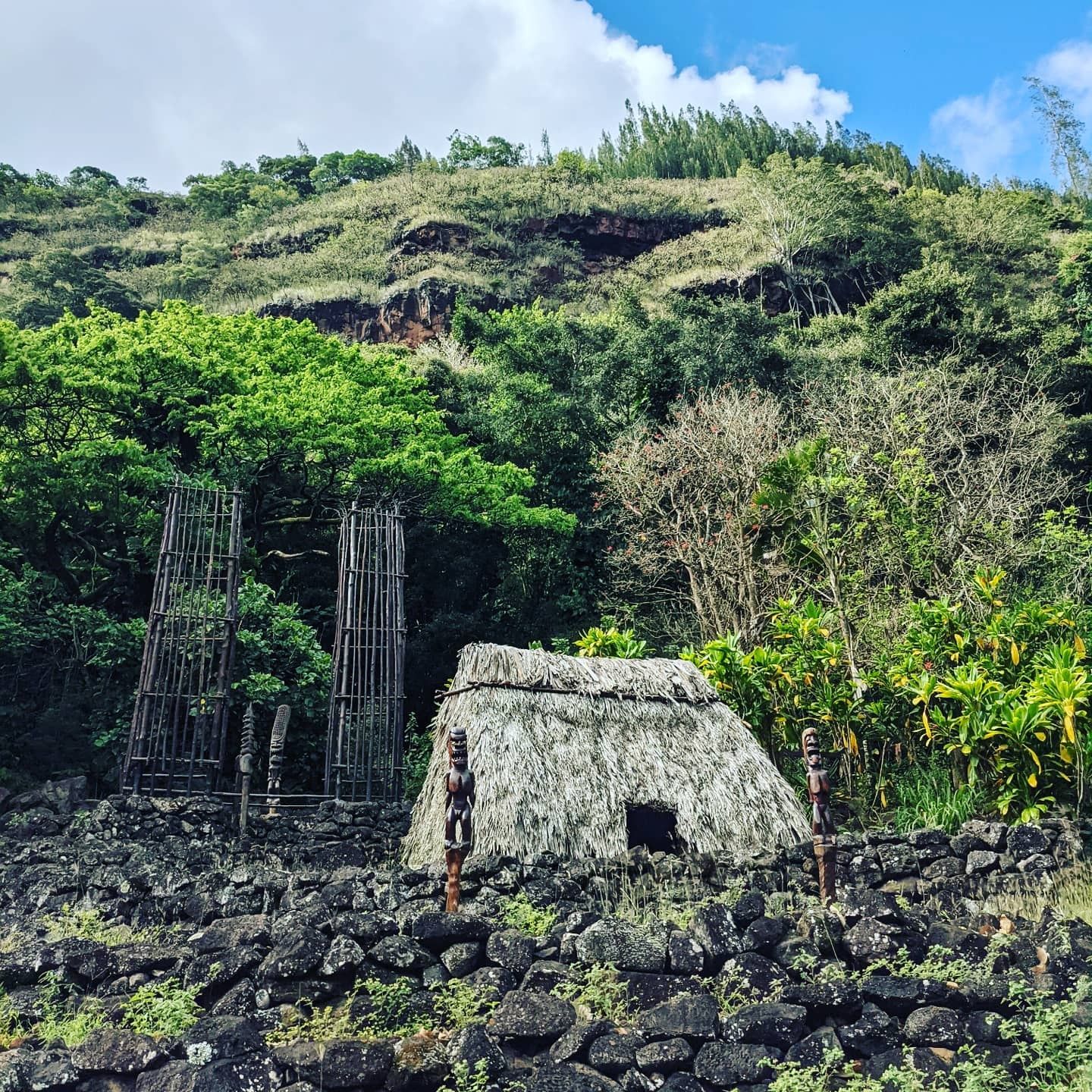
- Sacred Structures: The upper (mauka) section of the precinct housed wooden altars (lele) for offerings, structures (hale) for priests and sacred implements, and a oracle tower (lananuʻu mamao) connecting the heavens to the earth.
2. Dry-Stack Masonry (Paʻa Pōhaku)
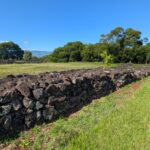
Unlike modern structures bound by cement, Puʻu o Mahuka Heiau was built entirely through dry-stack fashion, fitting basalt rocks together tightly without any mortar.
- Adaptive Wall Heights: The perimeter walls average about 4 feet in height—allowing observers to view ceremonial activities—but widen and reach up to 12 feet in height where the slope steepens.
- Paved Floors: The enclosed floor precinct was lined with a shallow layer of small paved stones, creating a smooth surface over the bedrock.
3. The Mystery of Transportation: The Human Chain
Building a temple of this scale on a high ridge required moving thousands of basalt rocks up from valley beds and field surfaces.
- Human Chains: To transport heavy pōhaku across long distances, ancient Hawaiians formed extended human chains, standing side-by-side to pass stones hand-to-hand directly to the construction site.
- Sacred Transit: Oral traditions describe human chains extending for over a mile, passing heavy rocks along the line “without once touching the ground in transit”. Because Hawaiians believed that every stone contained its own mana (spiritual energy), this collective effort was both an incredible engineering feat and a sacred act of community unity.
4. Visiting Puʻu o Mahuka Today
Today, Puʻu o Mahuka Heiau stands as a quiet testament to the ingenuity and spiritual devotion of ancient Hawaiʻi. When visiting this sacred site, visitors are reminded to treat the stones with utmost respect, staying on designated paths and preserving the pōhaku for generations to come.
We offer North Shore Historic Regenerative Tour! Please check the tours below the link.
References
Cheever, D., & Cheever, S. (2003). Pōhaku: The art & architecture of stonework in Hawaiʻi (J. S. Clifford & F. S. Haines, Eds.). Edition Limited.
- Discovering Puʻu o Mahuka Heiau: The Secrets of North Shore’s Sacred Stones
 Perched high on a rocky promontory in Pūpūkea, overlooking the sweeping expanse of Oʻahu’s famous Waimea Bay and Waimea Valley, sits Puʻu o Mahuka Heiau. Spanning roughly 8,000 square feet, it is one of the island’s most prominent and… Read more: Discovering Puʻu o Mahuka Heiau: The Secrets of North Shore’s Sacred Stones
 - The 19th-Century Whaling Industry: The Original Venture Capital ModelDid you know that the structural playbook of modern venture capital (VC) wasn’t invented in Silicon Valley in the 20th century? Its true historical archetype emerged over two hundred years ago in the high-stakes, dangerous world of 19th-century American… Read more: The 19th-Century Whaling Industry: The Original Venture Capital Model
- Guided by Stars and Swells: Where Did Polynesians Come From and How Did They Reach Hawaii?Introduction Isolated in the vast expanse of the Pacific Ocean, the Hawaiian Islands are among the most remote landmasses on Earth. How ancient voyagers reached these islands without modern navigational instruments remains one of the most remarkable human achievements.… Read more: Guided by Stars and Swells: Where Did Polynesians Come From and How Did They Reach Hawaii?
- Beyond the Stones: The Sacred Art and Architectural History of Hawaiian PōhakuWhen visiting Hawaiʻi, travelers often admire the majestic black lava walls, intricate stone fishponds, and historic coral churches. In traditional Hawaiian culture, stone—known as pōhaku—is far more than a physical building material; it is a vital connection to history,… Read more: Beyond the Stones: The Sacred Art and Architectural History of Hawaiian Pōhaku
- The Remarkable Achievements of Captain James Cook: The Navigator Who Mapped the PacificCaptain James Cook (1728–1779) was a British navigator, explorer, and cartographer who brought the Great Age of Discovery to its grand finale. Through his three landmark voyages across the Pacific Ocean, Cook didn’t just explore the world—he revolutionized geography,… Read more: The Remarkable Achievements of Captain James Cook: The Navigator Who Mapped the Pacific