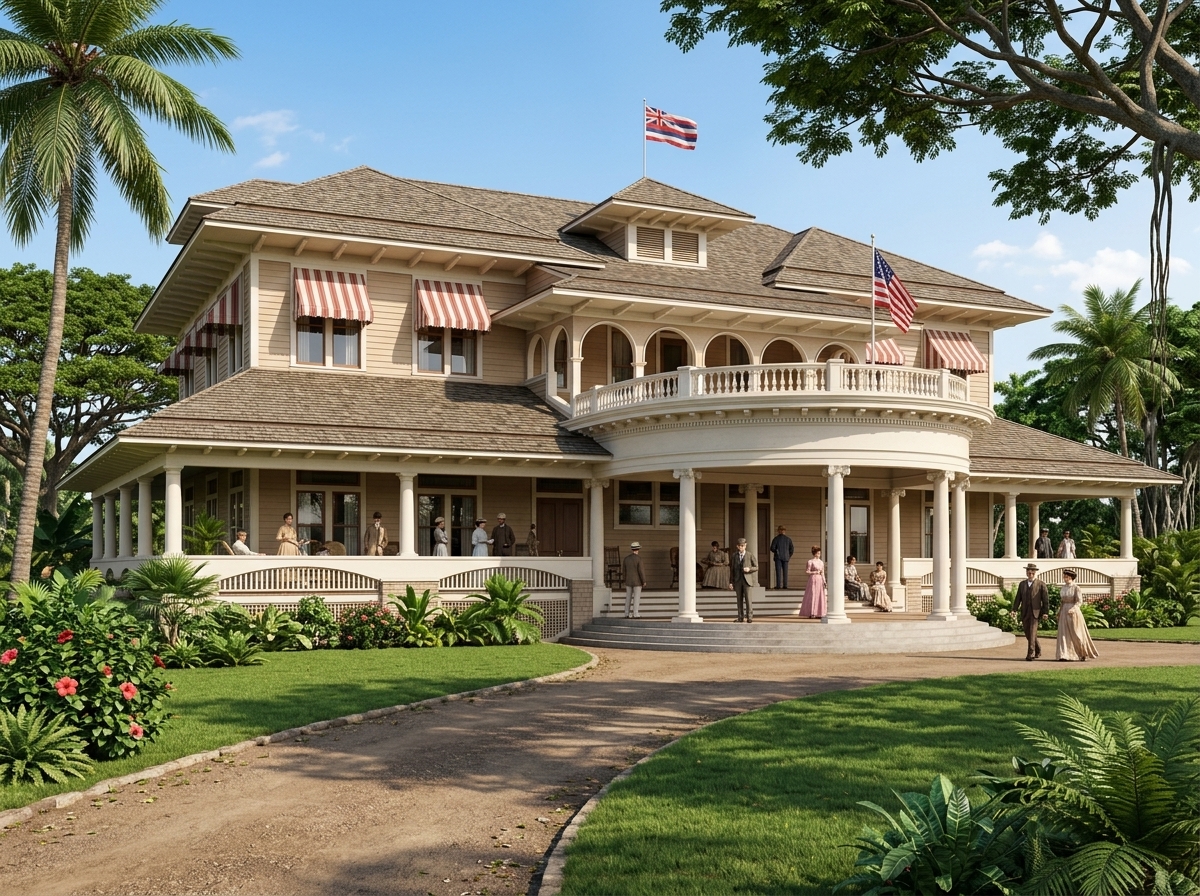
Before Haleiwa became world-famous as the epicenter of Oahu’s North Shore surfing, it was home to one of Hawaii’s earliest and most glamorous luxury escapes: the **Hale’iwa Hotel** [1]. Opened in 1899, this Victorian-style resort transformed a quiet agricultural coast into a premier retreat for Honolulu’s high society, establishing a legacy of hospitality that ultimately gave the entire town its iconic name
1. The Visionary and the Railway
The story of the Hale’iwa Hotel began with an unexpected turn of events. In 1865, Benjamin Franklin Dillingham, a merchant seaman, was left behind in Honolulu with a broken leg after being thrown by a horse [2]. Deciding to make Hawaii his home, Dillingham prospered as an entrepreneur and realized a daring dream: constructing the Oahu Railway and Land Company (OR&L).
By the late 1890s, Dillingham had laid 160 miles of track running from Honolulu along the leeward coast to the sugar plantations of Kahuku and the pineapple fields of Sanford Dole in Wahiawa [2]. While the railway successfully hauled agricultural freight to town, Dillingham recognized an untapped opportunity: there was nowhere on the North Shore for city residents (“townies”) to stay for pleasure. To solve this problem, he financed the construction of a grand, Victorian-style country getaway—the Hale’iwa Hotel.
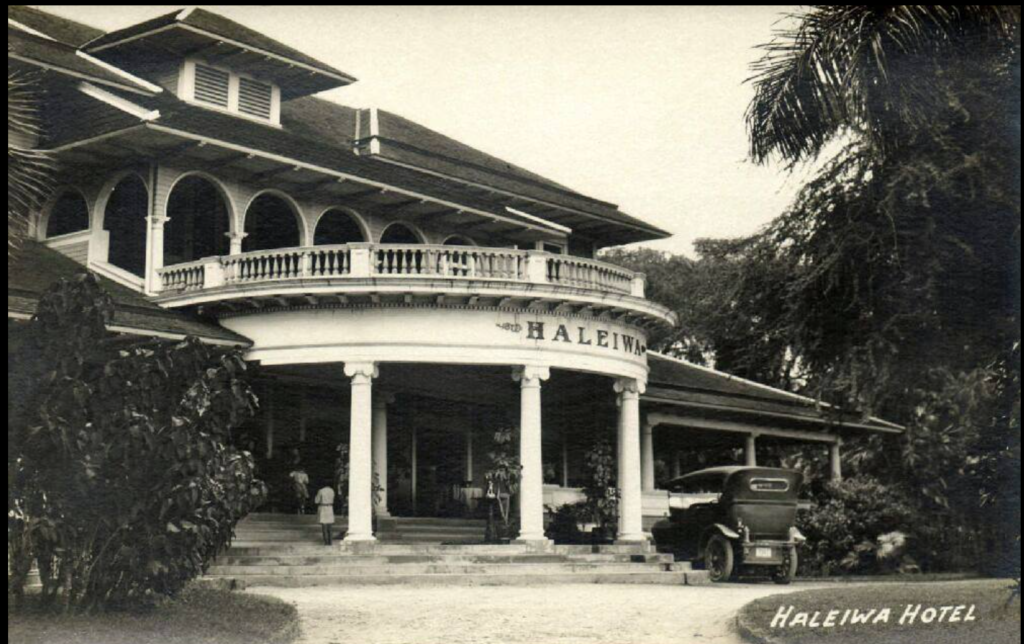
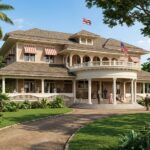
Picture1: Haleiwa Hotel by Images of Old Hawaiʻi
2. Victorian Elegance on Sacred Ground
To craft his luxury resort, Dillingham hired Oliver Green Traphagen, a noted mainland architect who lived and worked on Oahu between 1898 and 1907 [2]. Traphagen—who also designed Honolulu landmarks such as the Judd Building, the James Castle home, and Waikiki’s famous Moana Hotel—conceived a two-story, 40-room retreat situated gracefully along Anahulu Stream.
The site selected held deep historical and spiritual significance. The hotel was constructed on the ruins of *Kamani Heiau*, an ancient native Hawaiian temple, situated on a *pu’u* (hill) that had also hosted the North Shore’s first missionary church meetinghouse in the 1830s.
The resort took its name from *Hale’iwa*, the nearby women’s dormitory of a seminary along Anahulu Stream [2]. In the Hawaiian language, *hale* translates to “house” and *’iwa* refers to the great frigate bird that soars over island waters.
To ensure operational excellence, Dillingham appointed Colonel Curtis Piehu Iaukea as the hotel’s first general manager. A distinguished diplomat who had served as Secretary of Foreign Affairs and Royal Chamberlain for King Kalakaua, Colonel Iaukea brought royal etiquette and strict standards to the resort.
3. Unrivaled Luxury and Country Excursions
When the Hale’iwa Hotel opened its doors in 1899, it introduced unprecedented modern luxuries to the North Shore. For just \$10, Honolulu residents could purchase an all-inclusive weekend package covering a round-trip train ride and an overnight stay [4]. On Sundays, a popular 16-car passenger train known as “Consolidated Number 22” filled to capacity as it carried guests along the 55-mile scenic rail journey from Honolulu to Hale’iwa.
Upon arrival, guests entered a spacious ground-floor parlor featuring beautiful island wood paneling . The first floor housed administrative offices, a dining room, and a commercial kitchen [4]. A dramatic wooden staircase led to second-floor sleeping quarters, where single rooms and en suite apartments offered views of either the mountains or the Pacific Ocean [4]. Each room featured state-of-the-art amenities for the era, including a telephone and electric lighting generated by the hotel’s own power plant [4].
The resort offered a rich array of recreational activities:
Water Exploration: Visitors could rent canoes and rowboats to explore the quiet waters of Anahulu Stream.
The Men’s Lodge: Located five miles “mauka” (inland) toward Waimea Bay, a rustic lodge constructed of wooden logs with a thatched roof accommodated hunting and shooting excursions.
Billiards & Parlor Relaxation: Guests could retire to a private cottage featuring a billiards room for evening cigars and brandy.
Golf & Plantation Tours: Stables across the road provided horses for tours of the local sugar mill, and by the 1940s, a 9-hole golf course was laid out adjacent to the hotel.
4. Wartime Transformation, Decline, and Demolition
Despite being celebrated in old Hawaiian songs and dances, the Hale’iwa Hotel eventually faced intense competition [4]. During the 1920s, newer and larger luxury hotels opened along Waikiki Beach, shifting tourist traffic away from the North Shore [4]. The resort was operating at a loss even before the Great Depression of 1929 [4].
To adapt, the hotel was converted into a private beach club [4]. Following the outbreak of World War II, the property was requisitioned as an Army Officers’ Recreation Center, hosting military personnel and special events, including a reception for California Governor Earl Warren [3, 4]. However, the wooden structure gradually deteriorated over time and was finally demolished in 1952.
5. An Enduring Legacy: How a Hotel Named a Town
Although the Victorian building no longer stands, the Hale’iwa Hotel permanently shaped the identity of the North Shore [3]. As plantation workers and local families settled around the railroad and resort, the community adopted the hotel’s name, officially giving birth to the town of “Haleiwa”.
Today, the historic “pu’u” overlooking Anahulu Stream where the hotel once stood is the site of the popular restaurant “Haleiwa Joe’s”. Guests dining at the elevated location today stand on the historical ground where Oahu’s original North Shore resort welcomed travelers more than a century ago.
References
Jacobs, T. (Photographs by B. Romerhaus). *Haleiwa: A pictorial history*.
- Beyond the Surf: The Lost Grand Resort That Named Haleiwa
 Before Haleiwa became world-famous as the epicenter of Oahu’s North Shore surfing, it was home to one of Hawaii’s earliest and most glamorous luxury escapes: the **Hale’iwa Hotel** [1]. Opened in 1899, this Victorian-style resort transformed a quiet agricultural coast into a premier retreat for Honolulu’s high society, establishing a legacy of hospitality that ultimately… Read more: Beyond the Surf: The Lost Grand Resort That Named Haleiwa
- Discovering Puʻu o Mahuka Heiau: The Secrets of North Shore’s Sacred StonesPerched high on a rocky promontory in Pūpūkea, overlooking the sweeping expanse of Oʻahu’s famous Waimea Bay and Waimea Valley, sits Puʻu o Mahuka Heiau. Spanning roughly 8,000 square feet, it is one of the island’s most prominent and culturally significant sacred stone monuments. Beyond its breathtaking panoramic views, this massive complex tells an extraordinary… Read more: Discovering Puʻu o Mahuka Heiau: The Secrets of North Shore’s Sacred Stones
- The 19th-Century Whaling Industry: The Original Venture Capital ModelDid you know that the structural playbook of modern venture capital (VC) wasn’t invented in Silicon Valley in the 20th century? Its true historical archetype emerged over two hundred years ago in the high-stakes, dangerous world of 19th-century American deep-sea whaling. Here is how brave mariners, wealthy investors, and financial innovators built a high-risk, high-return… Read more: The 19th-Century Whaling Industry: The Original Venture Capital Model
- Beyond the Stones: The Sacred Art and Architectural History of Hawaiian PōhakuWhen visiting Hawaiʻi, travelers often admire the majestic black lava walls, intricate stone fishponds, and historic coral churches. In traditional Hawaiian culture, stone—known as pōhaku—is far more than a physical building material; it is a vital connection to history, community, and the sacred spiritual power known as mana. 1. The Spiritual and Daily Lifeline of… Read more: Beyond the Stones: The Sacred Art and Architectural History of Hawaiian Pōhaku
- The Remarkable Achievements of Captain James Cook: The Navigator Who Mapped the PacificCaptain James Cook (1728–1779) was a British navigator, explorer, and cartographer who brought the Great Age of Discovery to its grand finale. Through his three landmark voyages across the Pacific Ocean, Cook didn’t just explore the world—he revolutionized geography, navigation, and maritime science. Here is a look at the major achievements that cemented his legacy… Read more: The Remarkable Achievements of Captain James Cook: The Navigator Who Mapped the Pacific